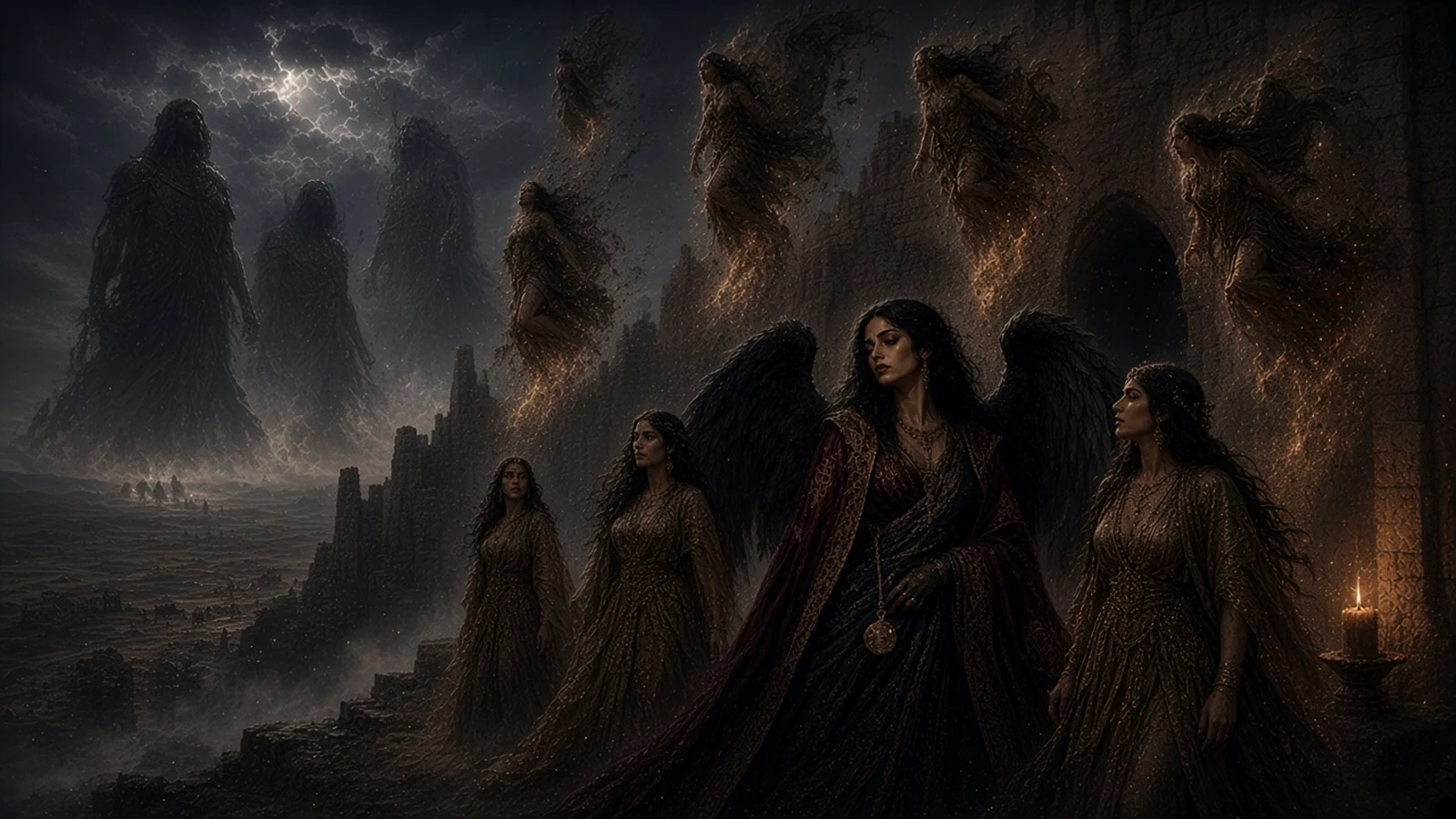
הפסוקים המרכזיים בעברית או בארמית, עם תרגום לאנגלית לעיון.
וַיִּרְא֤וּ בְנֵי־הָֽאֱלֹהִים֙ אֶת־בְּנ֣וֹת הָֽאָדָ֔ם כִּ֥י טֹבֹ֖ת הֵ֑נָּה וַיִּקְח֤וּ לָהֶם֙ נָשִׁ֔ים מִכֹּ֖ל אֲשֶׁ֥ר בָּחָֽרוּ׃
that the sons of nobles saw the daughters of men that they were fair; and they took them wives, whomsoever they chose.
JPS 1917 translates בְנֵי־הָאֱלֹהִים as “sons of nobles”, following Rashi and Onkelos; the Hebrew literally reads “sons of God/the gods”.
עברית: Miqra according to the Masorah (CC-BY-SA)אנגלית: The Holy Scriptures: A New Translation (JPS 1917) (Public Domain)
ספריא ↗מכון ממרא ↗חב״ד ↗
הַנְּפִלִ֞ים הָי֣וּ בָאָ֘רֶץ֮ בַּיָּמִ֣ים הָהֵם֒ וְגַ֣ם אַֽחֲרֵי־כֵ֗ן אֲשֶׁ֨ר יָבֹ֜אוּ בְּנֵ֤י הָֽאֱלֹהִים֙ אֶל־בְּנ֣וֹת הָֽאָדָ֔ם וְיָלְד֖וּ לָהֶ֑ם הֵ֧מָּה הַגִּבֹּרִ֛ים אֲשֶׁ֥ר מֵעוֹלָ֖ם אַנְשֵׁ֥י הַשֵּֽׁם׃
The Nephilim were in the earth in those days, and also after that, when the sons of nobles came in unto the daughters of men, and they bore children to them; the same were the mighty men that were of old, the men of renown.
עברית: Miqra according to the Masorah (CC-BY-SA)אנגלית: The Holy Scriptures: A New Translation (JPS 1917) (Public Domain)
ספריא ↗מכון ממרא ↗חב״ד ↗
וְשָׁ֣ם רָאִ֗ינוּ אֶת־הַנְּפִילִ֛ים בְּנֵ֥י עֲנָ֖ק מִן־הַנְּפִלִ֑ים וַנְּהִ֤י בְעֵינֵ֙ינוּ֙ כַּֽחֲגָבִ֔ים וְכֵ֥ן הָיִ֖ינוּ בְּעֵינֵיהֶֽם׃
And there we saw the Nephilim, the sons of Anak, who come of the Nephilim; and we were in our own sight as grasshoppers, and so we were in their sight.’
עברית: Miqra according to the Masorah (CC-BY-SA)אנגלית: The Holy Scriptures: A New Translation (JPS 1917) (Public Domain)
ספריא ↗מכון ממרא ↗
רַבִּי אוֹמֵר: רָאוּ הַמַּלְאָכִים שֶׁנָּפְלוּ מִמְּקוֹם קְדֻשָּׁתָן מִן הַשָּׁמַיִם אֶת בְּנוֹת קַיִן מְהַלְּכוֹת גְּלוּיוֹת בָּשָׂר עֶרְוָה וּמְכַחֲלוֹת עֵינֵיהֶן כְּזוֹנוֹת, וְתָעוּ אַחֲרֵיהֶן וַיִּקְחוּ מֵהֶן נָשִׁים, שֶׁנֶּאֱמַר: ״וַיִּרְאוּ בְנֵי הָאֱלֹהִים אֶת בְּנוֹת הָאָדָם״ וְכוּ'.
Rabbi said: The angels who fell from their holy place in heaven saw the daughters of the generations of Cain walking about naked, with their eyes painted like harlots, and they went astray after them, and took wives from amongst them, as it is said, "And the sons of Elohim saw the daughters of men that they were fair; and they took them wives of all that they chose" (Gen. 6:2).
עברית: Pirke DeRabbi Eliezer, Sefaria Vocalized Edition (Public Domain)אנגלית: Pirke de Rabbi Eliezer, trans. Rabbi Gerald Friedlander, London, 1916 (Public Domain)
ספריא ↗
5
יומא ס״ז ב:ז׳ Yoma 67b:7
Uza and Azael
תָּנָא דְּבֵי רַבִּי יִשְׁמָעֵאל: ״עֲזָאזֵל״ — שֶׁמְּכַפֵּר עַל מַעֲשֵׂה עוּזָּא וְעַזָּאֵל.
The school of Rabbi Yishmael taught: Azazel is so called because it atones for the actions of Uzza and Azael. These are the names of “sons of God” who sinned with “daughters of men” (Genesis 6:2) and thereby caused the world to sin during the generation of the Flood.
עברית: William Davidson Edition - Vocalized Aramaic (CC-BY-NC)אנגלית: William Davidson Edition - English (CC-BY-NC)
ספריא ↗
אין מקור עברי או ארמי באתר. מוצג תרגום לאנגלית, עם תווית ברורה.
And it came to pass when the children of men had multiplied that in those days were born unto them beautiful and comely daughters. And the angels, the children of the heaven, saw and lusted after them … And Semjâzâ, who was their leader … And they became pregnant, and they bare great giants, whose height was three thousand ells.
Not part of the Jewish canon, and no Hebrew text survives (Aramaic fragments at Qumran; full text in Ge'ez). English only.
אנגלית: R. H. Charles, The Book of Enoch (1917) (Public Domain)
Sacred-texts (ch. 6) ↗ch. 7 ↗
פרשנים ומתרגמים קלאסיים על אותם קטעים.
בני האלהים. בְּנֵי הַשָּׂרִים וְהַשּׁוֹפְטִים. דָּבָר אַחֵר בְּנֵי הָאֱלֹהִים, הֵם הַשָּׂרִים הַהוֹלְכִים בִּשְׁלִיחוּתוֹ שֶׁל מָקוֹם, אַף הֵם הָיוּ מִתְעָרְבִים בָּהֶם; כָּל אֱלֹהִים שֶׁבַּמִּקְרָא לְשׁוֹן מָרוּת, וְזֶה יוֹכִיחַ וְאַתָּה תִּהְיֶה לּוֹ לֵאלֹהִים (שמות ד'), רְאֵה נְתַתִּיךָ אֱלֹהִים (שם ז'):
בני האלהים THE SONS OF ELOHIM — The sons of princes and rulers (Genesis Rabbah 26:15). Another explanation of בני האלהים is that these were princely angels who came as messengers from God: they, too, intermingled with them (the daughters of men). Wherever the word אלהים occurs in the Scriptures it signifies authority, and the following passages prove this: (Exodus 4:16) “and thou shalt be his (אלהים) master”, and (Exodus 7:1) “See, I have made the (אלהים) a master.”
עברית: Pentateuch with Rashi's commentary by M. Rosenbaum and A.M. Silbermann, 1929-1934 (Public Domain)אנגלית: Pentateuch with Rashi's commentary by M. Rosenbaum and A.M. Silbermann, 1929-1934 (Public Domain)
ספריא ↗
הנפלים. עַל שֵׁם שֶׁנָּפְלוּ וְהִפִּילוּ אֶת הָעוֹלָם, וּבְלָשׁוֹן עִבְרִית לְשׁוֹן עֲנָקִים הוּא:
הנפילים THE GIANTS — Thy were called נפילים because they fell (נפלו) and caused the downfall of (הפילו) the world (Genesis Rabbah 26:7).
עברית: Pentateuch with Rashi's commentary by M. Rosenbaum and A.M. Silbermann, 1929-1934 (Public Domain)אנגלית: Pentateuch with Rashi's commentary by M. Rosenbaum and A.M. Silbermann, 1929-1934 (Public Domain)
ספריא ↗
וַחֲזוֹ בְנֵי רַבְרְבַיָּא יָת בְּנַת אֱנָשָׁא אֲרֵי שַׁפִּירָן אִנוּן וּנְסִיבוּ לְהוֹן נְשִׁין מִכֹּל דִּי אִתְרְעִיאוּ:
The sons of the rulers saw that the daughters of man were fair and they took for themselves wives from whomever they chose [wanted].
עברית: Sifsei Chachomim Chumash, Metsudah Publications, 2009 (CC-BY-NC)אנגלית: Metsudah Chumash, Metsudah Publications, 2009 [with Onkelos translation] (CC-BY-NC)
ספריא ↗
שַׁמְחַזָאֵי וְעוּזִיאֵל הִינוּן נְפִילִין מִן שְׁמַיָא וַהֲווֹ בְּאַרְעָא בְּיוֹמַיָא הָאִינוּן …
Schamchazai and Uzziel, who fell from heaven, were on the earth in those days; …
עברית: Targum Jonathan on Genesis (Public Domain)אנגלית: The Targum of Jonathan ben Uzziel, trans. J. W. Etheridge, London, 1862 (Public Domain)
ספריא ↗